
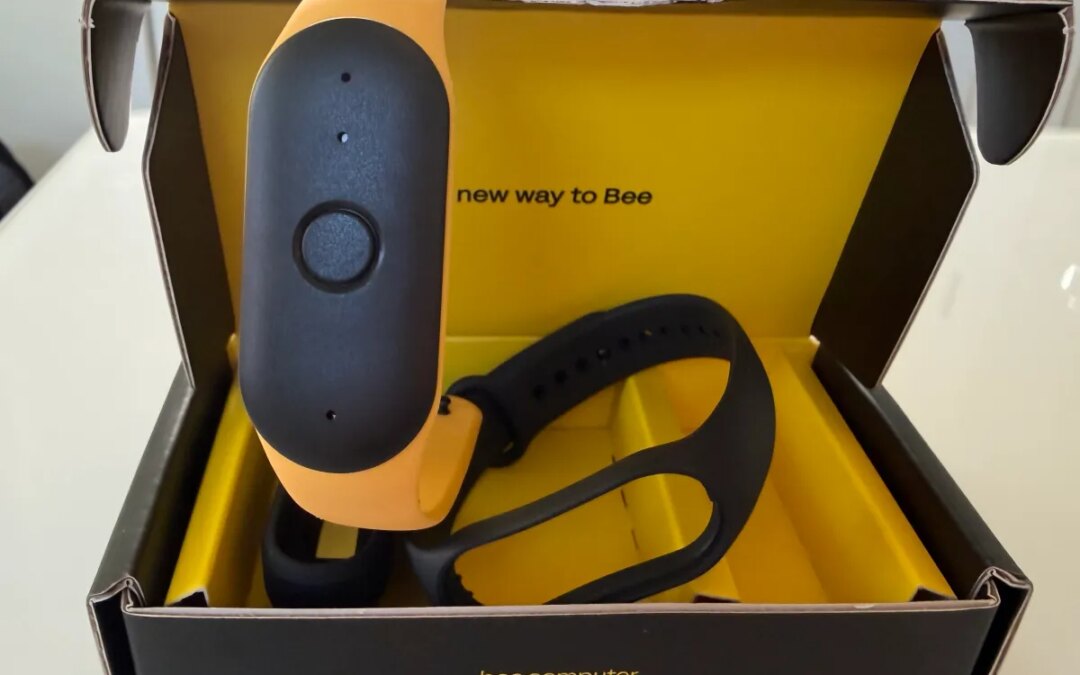
Meet Bee: The AI Device That’s Changing How We Capture Conversations
In a world increasingly driven by technology, the way we capture and retain information is evolving. Enter Bee, Amazon’s latest AI device that promises to change how we perceive conversation documentation and personal assistance. This simple yet innovative device is turning heads with its ability to listen to, record, and analyze our everyday interactions—offering a glimpse into the future of AI in our daily lives.
A Simple Start: How Bee Works
Using Bee couldn’t be easier. With just one press of a button, you can start recording conversations. But it’s not just another recorder. Once you’ve finished your chat, Bee’s companion app automatically segments the conversation into digestible parts, summarizing each section with color-coded backgrounds for easier navigation. Let’s say you’re interviewing someone about their latest product. Instead of sifting through a long-winded transcript, you’d find neatly organized segments: the introduction, detailed product insights, and industry trends, all clearly labeled.
This streamlined approach is fresh, but it does raise a few eyebrows. During our initial tests, we found that while confirming who spoke when was straightforward—just tap on a section to label yourself—it lacked the advanced speaker identification found in other high-end transcription tools. Moreover, once Bee transcribes a conversation and summarizes it, the audio is discarded entirely. This could pose issues if you need to ensure accuracy or context.
More Than Just a Recorder
Bee aims to be more than just another tool for work. It’s designed to accompany you as you go about your day. For instance, imagine meeting someone new at a conference. After your conversation, Bee might suggest connecting with them on LinkedIn or following up about their product. It’s about turning casual interactions into meaningful connections—a feature that can genuinely streamline networking.
The app also offers a unique voice note feature, letting you dictate quick thoughts instead of scribbling them down. Picture yourself rushing out of a meeting, and instead of fumbling with your notes app, you simply record a message for later.
Additionally, Bee keeps track of “memories” and offers insights about you as it learns—similar to the memory features of other AI chatbots. The more you interact with it, the better it understands your preferences, creating a tailored assistant experience.
Design and Durability: A Mixed Bag
While Bee shines in function, its design has room for improvement. The sports band—intended for everyday wear—was surprisingly flimsy during our tests. It fell off on two occasions while we were simply sitting still. Thankfully, a sturdier clip-on option is available, though we haven’t had a chance to put it to the test yet.
On a brighter note, the app is a standout. Its user-friendly interface surpasses Amazon’s other apps, making navigation a breeze. You won’t be scouring multiple menus to access Be’s features, which feels like a win in today’s tech landscape.
A New Social Contract in Conversation
While Bee captures interactions, it raises questions about social norms. It’s crucial to know when and if it’s appropriate to record conversations. Although Bee lights up to signal recording, there’s still a gray area. In a world where recording conversations can be viewed as intrusive, how will people adjust to using such technology?
For example, during a recent chat at the Consumer Electronics Show (CES), a representative jokingly urged me to speak louder into their microphone, which was connected to a recording device. It was a surreal moment that made me realize the implications of our conversations being perpetually on the record. If devices like Bee become common, will we find ourselves self-censoring our speech? It’s a thought-provoking dilemma for anyone who values privacy in public spaces.
A Future Yet to Be Explored
Bee is an innovative addition to the landscape of personal AI assistants, but it remains to be seen whether it’ll resonate with the average consumer. There’s an undeniable appeal to the idea of having a smart companion that not only captures but also enhances our conversations. However, its true success will depend on user acceptance and cultural shifts regarding recording interactions.
Moreover, as the world continues to embrace AI technologies, ethical conversations will need to keep pace. Will we accept a society where our daily conversations could be archived and analyzed by an AI? Amazon is undoubtedly taking a risk by marketing Bee as an accessible device for everyday users. After all, how much do we want to rely on technology to remember our lives?
Why This Matters
The implications of Bee extend beyond mere convenience. It invites us to reflect on our communication habits and how technology can augment—or hinder—authentic interaction. As we adapt to these rapidly changing tools, it’s essential to ask: What does this mean for our relationships, our memories, and our personal stories?
With Bee, Amazon is offering a peek into a future where AI becomes an integral part of our daily lives, capturing moments we might overlook. But as we stand on this precipice, it’s crucial to ponder how we want to shape that future. Will technology enhance our human experience, or will it overshadow it?
The conversation about Bee is just beginning, and its impact may very well redefine how we interact with technology—and each other. Whether this will lead to a more connected society or a more isolated one remains to be seen, but it’s a conversation worth having.
Recent Comments